Design System
A design system is a set of standards for managing design at scale, reducing redundancy and creating a shared language and visual consistency across channels.What are the benefits of a Design System
- September 28, 2026
- 02 min
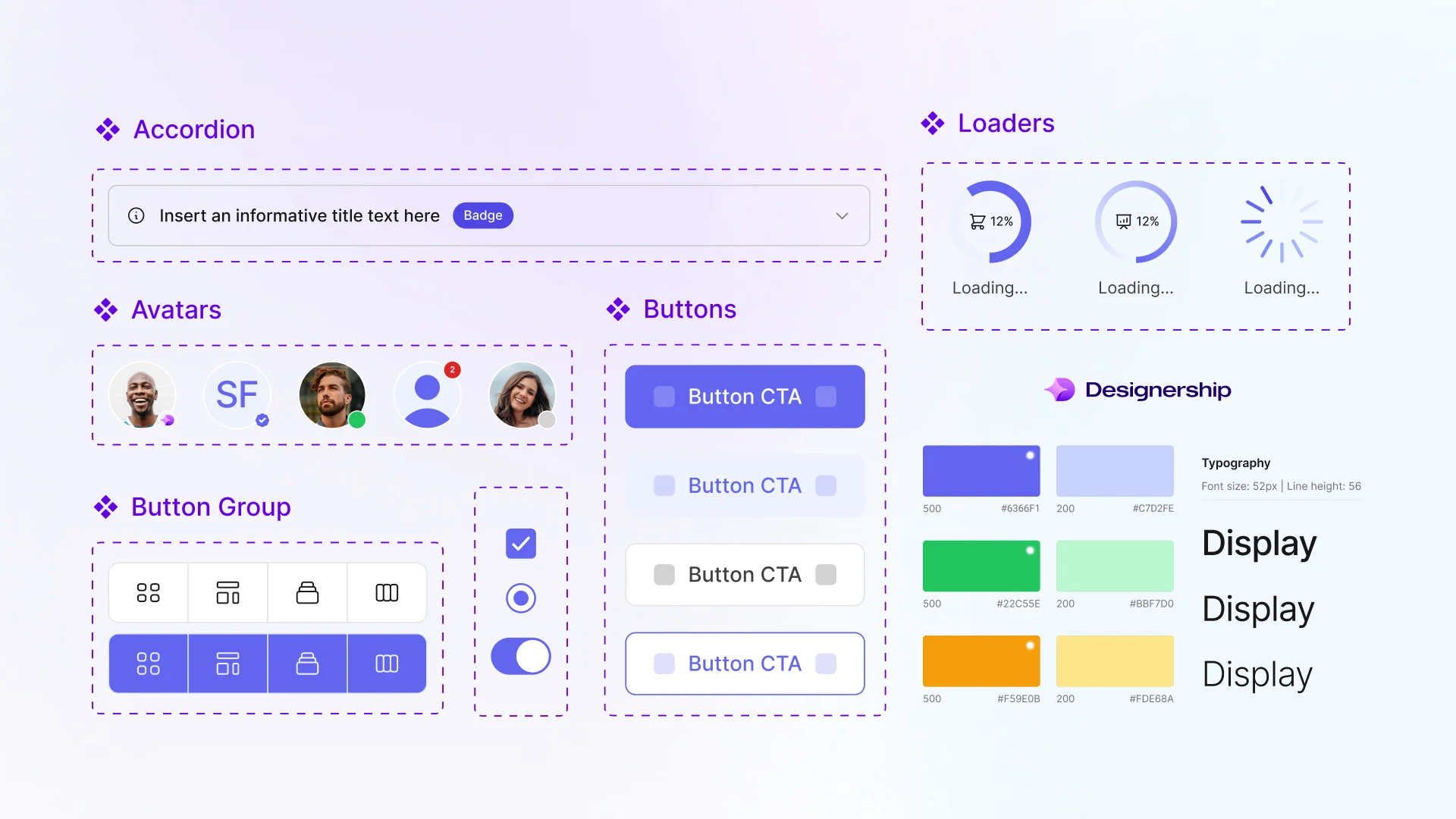
What are the benefits of a design system ?
1. Boosts Efficiency and productivity
Design systems eliminate the need for repetitive tasks like designing buttons from scratch. This gives UX/UI designers the opportunity to allocate time for innovating and experimenting on new features that can improve the product.
Beyond saved time, a productive team means fewer people are needed to craft the same high-quality output in the same time. In effect, this can reduce cost and enable you to ship more features and products faster.
2. Maintain Visual Consistency
A product’s consistency contributes to an enhanced user experience. Using the same pre-defined and approved typography or color scheme for example helps keep the design harmonious.
Design systems ensure that every designer in a team is using the right set of assets and components unique to a brand or product.
3. Enhances sustainable scalability
As a product, business, or team grows, it’s important to ensure everyone working on the project is aligned on how to produce the same quality output to scale well.
A good design system has well-defined set of rules or a guide to follow. Having proper documentation in place keeps designers informed on how to optimize their workflows. This can serve as their onboarding process to ensure they know where components are and how they work.
4. Promotes seamless collaboration
Design systems are built and maintained by the teams who use it. A well-documented system makes it easy for collaborators to efficiently implement it into their workflow, regardless of when they started contributing.
Incorporating a maintenance process for improving and updating the design system from everyone in the team can help ensure designs and their final products always work with the latest version of features and visuals.
5. Improve code and design
A topnotch design system defines component functionalities with code. Beyond ensuring seamless handovers, this sets up the entire product team for success.
This means having a designer and developer’s perspective when setting up the system matters. Optimizing a design system’s components for user experience will go a long way in ensuring you deliver a high-quality product.
Future-proofing design systems
Digital products are bound to change. A well-structured design system should be prepared to work alongside this.
To future-proof your system, there should always be room for innovation. With the right documentation, practices, and processes in place to ensure designers can access, update, and improve information, teams can benefit and move forward seamlessly.
Next i'm gonna address some details in the process of creating a design system for your project.